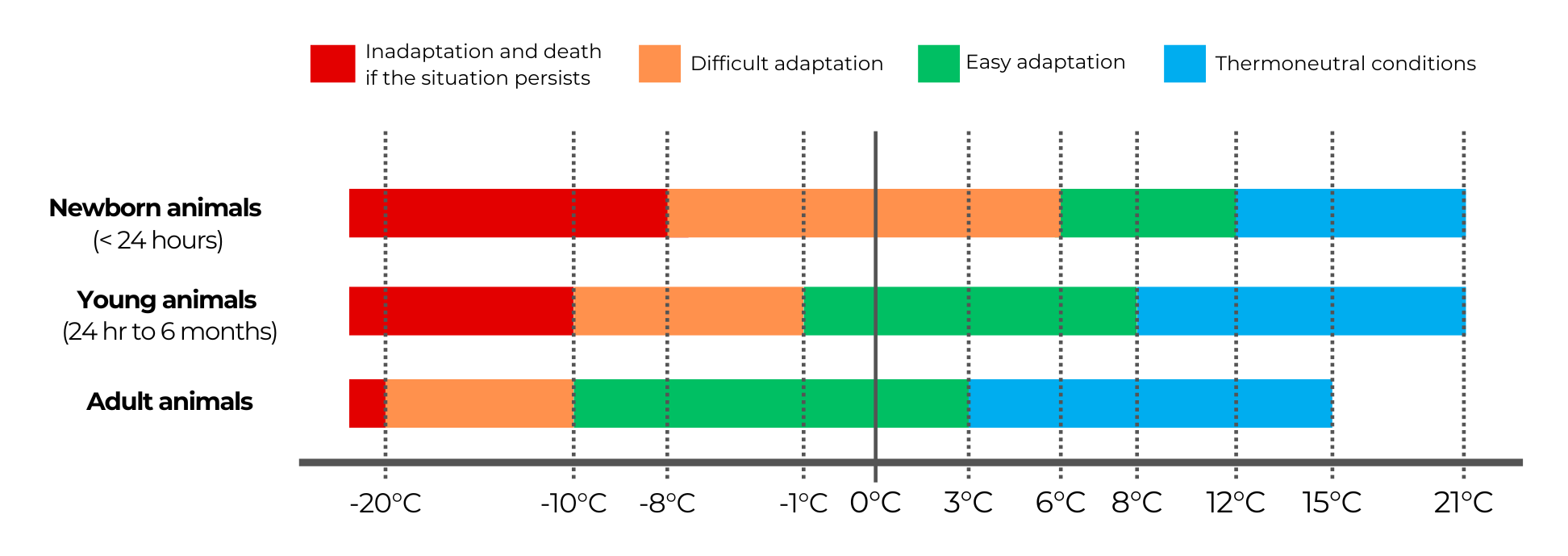
Source: L'élevage des chevrettes : Recommandations techniques pour une croissance réussie. Institut de l'élevage. 2023


We offer you herd management tools to help you achieve your production goals for a better bottom line.
We provide world-class genetic evaluation services that benefits herd development for all dairy breeds in Canada.

In partnership with Holstein Canada
Milk collected during routine milk recording, bulk tank sampling, or as a special analysis, provides you with vital information to manage your dairy animals.
Thanks to our Apps and Software herd information is available at your fingertips, making management decisions easy and convenient.
From animal health and welfare to ruminomics, our dairy expertise offers you perspective for profitable and sustainable farming practices.
We offer dairy producers and stakeholders various means of knowledge transfer in dairy production such as publications, training, personalized visits, webinars and online tutorials.
When it comes to housing, young goats have very specific needs in terms of environment, available floor space and the layout of their living area. All these factors must be considered in order to provide young stock with a living environment that promotes their development and well-being. All while not forgetting, of course, their breeders’ well-being!
Newborn kids have specific temperature requirements. Fragile at birth, though they are more resistant to low temperatures after a few days. This is all the more true if they receive warmed milk at feeding. For easy adaptation and optimum comfort, the temperature in their building should be between 12oC and 21oC for newborns, and draughts should be kept to a minimum (see Figure 1).
The right temperature and efficient ventilation are key to ensuring a good atmosphere in the building. Optimizing these conditions will ensure good growth of the kids, and limit microbial contamination and spread.
For feeding, the surface area and trough length requirements of kids vary according to their age (see Table 1). Feed troughs and feeding systems must be designed so that all kids have easy and comfortable access to food at the same time, especially when their feed ration is limited. Too high a stocking density is stressful for kids and also encourages the spread of disease.
| Kid age | ||||
| Recommendations | 1 month | Weaning | 7 months | 12 months |
| Minimum surface (m2/animal) | 0.25 à 0.30 | 0.5 | 1.0 | 1.5 |
| Minimum feed trough or bunk length (cm/animal) | 20 | 25 | 30 | 33 |
A well-lit building contributes to good working conditions for breeders, and adds to animal welfare. Light is also a key factor in the successful reproduction of kids once they reach breeding age. In the case of deseasonalising, 200 lux lighting at animal eye-level is required. Click here for a short guide published by the University of Ohio on how to measure lux with your phone.
Artificial lighting can be installed to complement natural lighting. The aim is to provide a total of 150 lux in the goat kids’ resting area so as to be able to have good lighting conditions for work.
Regardless of the type of flooring in the barn, it is important to prevent kids from coming into contact with damp bedding, especially before they are weaned. To control humidity and odors, bedding must be cleaned regularly. Damp bedding encourages the multiplication of flies, which are important disease vectors. What’s more, if the moisture isn’t removed, there’s a greater risk of creating discomfort for the kids and an increased risk of lung disease. It is therefore important that the air in the building is cycled reguarly, but without causing draughts.
To improve housing and enable the kids to express their natural behaviors, it is now required to provide goats with at least one type of enrichment (source: Code of Practice for the Care and Handling of Goats, 2022).
Enrichments can be relational or social, nutritional, occupational, physical or sensory. They will generally provide a more complex environment for the goats with, for example, platforms, brushes, large drums, etc.
Such enrichments can bring long-term benefits, such as reduced stress and aggression. Enrichments can also increase growth rates.
Before purchasing enrichments, it’s important to consider their benefits for the animals. It’s also important to consider the risks involved, the constraints they may induce and their durability.
Well-housed kids will be more comfortable, be more productive as adults, and will ultimately be more profitable for the breeder.
